Oregon State leaned on size and interior scoring to control Portland in decisive conference-tournament win

Inside-first approach defined the matchup
Oregon State’s clearest path against Portland was to simplify: attack the paint, pressure the rim, and accept physical possessions that forced Portland into half-court defense. The plan showed in the championship-game outcome of the 2025 West Coast Conference (WCC) women’s tournament in Las Vegas, where Oregon State beat Portland 59-46 on March 11, 2025.
The scoring pattern underscored how the game tilted. After Portland led 13-9 after one quarter, Oregon State held Portland to four points in the second quarter, creating separation that Portland never fully erased. By the end of three quarters the margin remained substantial, and Oregon State closed without needing a high-scoring finish.
Post production and rebounding set the terms
The interior emphasis was personified by Catarina Ferreira, who finished with 16 points and 12 rebounds and was recognized as the tournament’s Most Outstanding Player. Oregon State’s ability to play through the post and win the rebounding battle limited the number of transition opportunities Portland typically uses to generate efficient looks and free-throw pressure.
Portland’s path back required sustained offense, but the second-quarter scoring drought effectively turned every empty possession into extra value for Oregon State’s paint touches.
The game also ended a significant run for Portland: the loss snapped a 13-game winning streak for the Pilots. In a tournament setting, that matters because it reframes the margin for error—especially when the opponent can keep the game in the half court and repeatedly force contested finishes.
Why the second quarter proved decisive
Championship games often hinge on a single stretch where one team maintains structure while the other loses rhythm. Portland’s four-point second quarter created a low-ceiling environment: even when Portland stabilized later, Oregon State had already banked a cushion large enough to prioritize shot selection and defensive positioning over pace.
- Portland: 13 points in the first quarter, then 4 in the second
- Oregon State: built its lead without needing a scoring surge late
- Final: Oregon State 59, Portland 46
Context: a rivalry shaped by high stakes
The matchup carried added weight beyond the trophy. It was Oregon State’s first season competing in the WCC, and the title delivered the conference’s automatic NCAA Tournament berth. For Portland, it was a missed chance at a third straight WCC tournament championship, after entering the final as the two-time defending tournament champion.
In the end, Oregon State’s inside-out priorities—post touches, rebounding control, and defensive stability—produced a game script that did not require stylistic compromise. Portland had to chase the game, and Oregon State’s interior advantage kept the chase costly possession by possession.
Cold front may bring brief low-elevation snow to Portland metro from Monday night into Tuesday morning
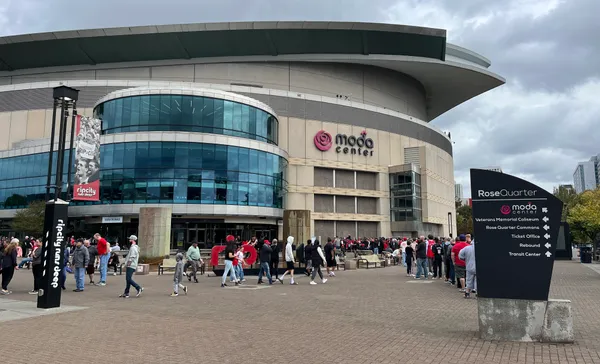
Rose Quarter Doubleheader: Blazers and Winterhawks Highlight Sunday Match Day in Portland
Morning Briefing: Legal Victories, Safer Streets, and a Sunday for the Blazers