Portland’s Syringe Services Program Surpassed One Million Syringes in 2025, Driven by Buyback Returns
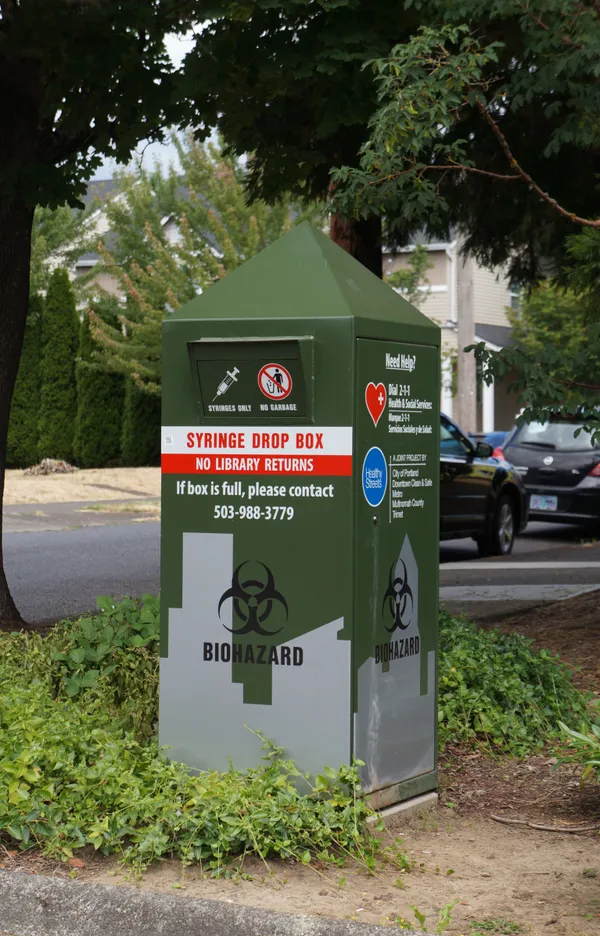
Distribution rose as the city paired harm reduction with a cash redemption pilot
Portland’s Syringe Services Program distributed more than 1 million sterile syringes in 2025, a milestone for the city’s public health-run harm reduction operation. City figures show 1,057,062 syringes were provided during the year, alongside a major increase in used-syringe collection tied to a syringe redemption initiative that began in early 2025.
Portland reported collecting 913,487 syringes in 2025 through a mix of returns at the exchange, citywide sharps containers and the redemption program. That translates to an 86% overall collection rate for the year, the city’s highest in four years and a notable rise from a 66% collection rate reported for 2024.
How the redemption program works
The city’s redemption pilot pays participants 10 cents per used syringe returned, capped at $20 per person per week. By the end of 2025, the city reported paying $33,633 in redemptions. Public health officials described the cap as an operational control while still creating an incentive for safe disposal, particularly for people without stable access to secure disposal options.
Early program monitoring in 2025 indicated that returns increased sharply in the first weeks after launch. City reporting on the pilot also described participation by individuals experiencing homelessness or unstable housing as a significant share of those enrolled in the redemption effort.
Policy backdrop: Maine’s shift away from one-for-one exchanges
The local debate over needle litter has unfolded against a statewide regulatory change. Maine updated its Syringe Services Program rule in 2023 to allow distribution outside a strict 1:1 exchange model. Under the rule, programs may provide up to 100 syringes per encounter when a client does not have used syringes to exchange, while also permitting programs to set tighter limits through internal policy.
Supporters of needs-based distribution argue that providing adequate sterile supplies reduces syringe reuse and lowers the risk of blood-borne infections such as HIV and hepatitis C. Critics and some neighborhood advocates have emphasized the visible public impact of improperly discarded syringes and have pressed for tighter distribution controls.
Community impacts and next steps
Portland officials have framed the 2025 data as evidence that the city can expand collection without reducing access to sterile supplies. The city has also described complementary efforts—such as sharps receptacles and coordinated syringe pickup—as part of its strategy to address public disposal concerns.
The 2025 totals show both higher distribution and higher recovery, reflecting a dual objective: preventing disease transmission while reducing syringe litter in public spaces.
- 2025 syringes distributed: 1,057,062
- 2025 syringes collected: 913,487
- 2025 collection rate: 86%
- Redemption incentive: $0.10 per syringe, capped at $20 per person per week
City health officials have indicated interest in expanding return opportunities and adjusting program limits as the pilot matures, while policymakers continue to weigh how to address needle waste without disrupting core public health goals.