Portland’s Big Pipe neared capacity after 12 hours of rain, testing the city’s overflow defenses
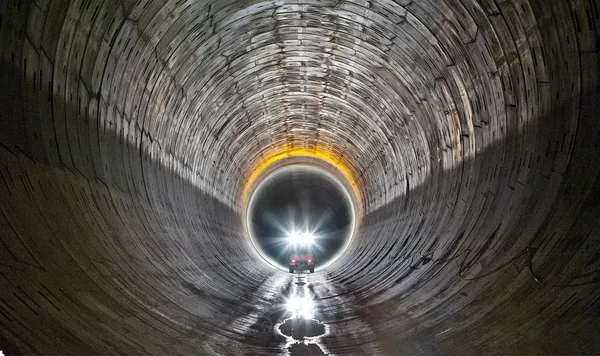
Big Pipe levels surged during sustained rainfall
Portland’s “Big Pipe” combined sewer overflow (CSO) system climbed to roughly 97% full after about 12 hours of rain, a level that places the underground storage tunnels close to the point at which an overflow can occur. City tracking data for the system is published in 15-minute increments and reflects how much stormwater and sewage is being stored rather than released to the Willamette River.
The Big Pipe network is designed to intercept combined flows from older parts of the city where stormwater and sanitary sewage share the same pipes. During heavy storms, that mixture can exceed the normal conveyance and treatment capacity. The storage tunnels temporarily hold the flow and send it onward for treatment as capacity becomes available.
What “97% full” means operationally
As the system approaches full, operators have less buffer for additional bursts of rainfall. City guidance describes 100% as the threshold at which a CSO is occurring. When that happens, public health advisories are typically issued to limit contact with the river for a set period after the event because of elevated bacteria risks associated with untreated discharges.
In practical terms, near-capacity readings can rise quickly depending on rainfall intensity and how fast the wastewater system can move stored volume to the treatment plant. Levels can also fluctuate as inflows ease or pumping and treatment catch up.
Background: why Portland built the Big Pipe system
Portland spent roughly two decades building large-diameter storage and conveyance tunnels on both sides of the Willamette River to sharply reduce CSOs. The major components entered service in stages and were substantially completed by 2011. Before the program, combined sewer overflows occurred frequently during rainy weather.
The city’s system relies on multiple layers of capacity and capture, including:
Large storage tunnels (the “Big Pipes”) that temporarily hold combined sewage and stormwater.
Pump stations and conveyance infrastructure that move flow to treatment as capacity allows.
- Green infrastructure,” such as rain gardens and other stormwater features, intended to reduce how much runoff enters the combined sewer system.
Why near-capacity events still happen
Even with major storage, Portland can face conditions that push the system to its limits. Short, intense downpours and long-duration rain can both drive rapid inflows. In addition, severe regional storms—sometimes associated with atmospheric river patterns common to the Pacific Northwest—can deliver rainfall rates that exceed the system’s ability to store and treat all combined flow without approaching the overflow threshold.
What to watch next
Near-capacity readings can be a leading indicator for the risk of a CSO if heavy rain persists. The most immediate factors are the duration of rainfall, the intensity of incoming storms, and whether the system can draw down stored volume between pulses of precipitation. If levels reach 100%, overflow conditions are considered underway and public health advisories may follow for river users.