Portland ICE demonstration sees no tear gas as courts and appeals reshape federal crowd-control rules
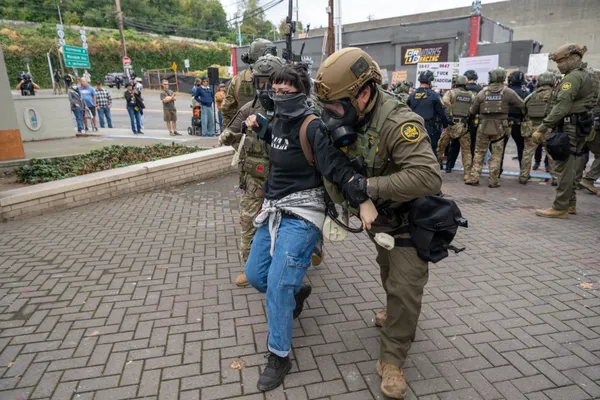
A weekend shift after months of escalating clashes
Protesters who gathered outside Portland’s Immigration and Customs Enforcement (ICE) facility over the weekend reported an unusual change from recent demonstrations: federal officers did not deploy tear gas during the early evening hours. The absence of chemical munitions stood out after a winter marked by repeated use of tear gas and other crowd-control measures at the South Waterfront site, which has become a focal point for local opposition to federal immigration enforcement.
The weekend demonstration followed a sequence of court actions that, through February and March, imposed limits on when federal officers can use tear gas and other munitions near the facility. Those restrictions were the product of separate lawsuits brought by protesters and freelance journalists, and by residents of a nearby affordable housing complex who said they were exposed to chemical agents in their homes.
What the court orders changed—and why it matters
In early February, a federal judge issued a temporary restraining order limiting the use of chemical and projectile munitions against people who do not pose an imminent threat of physical harm. The order also addressed firing practices, including limits on targeting areas of the body associated with serious injury.
In March, the restrictions were extended through preliminary injunctions in both cases, reinforcing the framework that the use of tear gas is not justified solely by trespassing, refusal to disperse, or passive resistance. The rulings framed the issue as a balance between law-enforcement authority and constitutional protections for protest and newsgathering.
An appeals court pause adds uncertainty
Late in March, a federal appeals court paused the Portland-area orders restricting tear gas use at the ICE facility. A pause does not resolve the underlying lawsuits, but it can temporarily alter what standards are enforceable while appellate review proceeds.
That legal back-and-forth has created uncertainty for demonstrators, nearby residents, and public officials attempting to understand what rules govern federal response tactics at the site on any given weekend.
Local government role and limited authority
Portland officials have publicly condemned the use of chemical munitions near the facility, emphasizing health and safety impacts on demonstrators and people living in the surrounding neighborhood. The city has also noted a key jurisdictional reality: the ICE facility is guarded by federal officers, and local police do not direct federal operational decisions there.
- Federal officers control security posture at the facility perimeter.
- Local government statements and policies do not, by themselves, set federal crowd-control rules.
- Court orders—and their status on appeal—have been the primary formal constraints in recent months.
What happened this weekend
Demonstrators said the lack of tear gas was unexpected given earlier protests where chemical agents were deployed during daytime events that included families and older participants.
By early evening, observers described federal agents monitoring activity, including from the roofline, but without visible tear-gas deployment. Whether that restraint reflected shifting tactics, legal caution amid ongoing litigation, or the day’s conditions remains unclear. Further court action is expected as the appeals process continues and the underlying cases move forward.