Portland expands shared e-scooter access while police records show serious crashes, fatalities, and ongoing safety questions
A permanent program with broader reach
Portland moved in 2024 from an extended pilot into a permanent, citywide shared e-scooter program, selecting two operators—Lyft and Lime—under multiyear contracts. The system was designed to expand availability across Portland’s full footprint while setting operating requirements tied to accessibility and sidewalk management.
The permanent program launched with a combined cap of up to 3,500 shared scooters across the two providers. The city also required companies to deploy devices throughout Portland daily, added seated scooter options to expand accessibility, and required discounted pricing options for qualifying low-income riders through established programs.
New parking controls and rider education
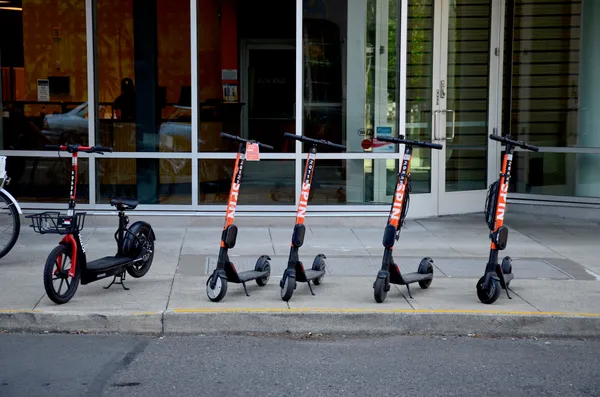
A central program change was a lock-to requirement: riders must end trips by securing scooters to public bike racks or signposts, and certain devices can be locked to designated bikeshare stations. The city’s stated purpose for the rule is to reduce sidewalk obstructions and trip hazards from improperly parked or toppled scooters.
To reinforce the change, the city rolled out a public information campaign in 2024 with messaging focused on riding rules and end-of-trip parking behavior. Program revenue generated through fees paid by scooter companies and riders was used to fund that outreach.
Injuries and fatalities recorded in 2025 investigations
While the program has expanded access, serious crashes involving e-scooters have continued to appear in Portland’s traffic-fatality investigations.
In one 2025 case, police reported that a 45-year-old man riding an electric scooter fell after hitting a pothole in Southeast Portland on August 18, 2025, suffered a severe head injury, and died on September 11, 2025.
In another case, a 41-year-old scooter rider was reported to have collided with a vehicle in North Portland early on October 22, 2025, was hospitalized with serious injuries, and died on October 23, 2025. Police reported the rider was traveling against the direction of a one-way street and was not wearing a helmet.
Police also described an August 17, 2025 crash in the Lloyd area involving two people on a shared scooter and a tractor trailer; one person died at the scene and another was hospitalized. Investigators said helmet use was not observed for the scooter riders and stated alcohol impairment was being investigated as a factor.
How deaths are counted, and what that can miss
Fatal-crash reporting can hinge on timelines. Federal fatality reporting standards commonly used in traffic safety datasets include a 30-day rule, counting deaths that occur within 30 days of a crash. Portland police have highlighted that their investigative totals can differ from other public reporting because some deaths fall outside that window even when the crash itself is investigated as a fatal traffic event.
Portland’s permanent e-scooter program is intended to expand mobility and manage sidewalk impacts, while major-crash investigations show ongoing risks from roadway hazards, rider behavior, and collisions with motor vehicles.
Baseline rules that shape enforcement and risk
Oregon rules governing motor-assisted scooters set a minimum rider age and require helmet use. Shared-scooter operators typically impose additional age requirements through their rental platforms. Enforcement and education efforts intersect with the city’s safety goals, particularly as ridership grows and scooters operate on streets where conflicts with cars, freight traffic, and roadway conditions remain persistent safety factors.