Portland expands basic sidewalk cleaning program, with crews targeting business corridors and high-impact city areas
A citywide service focused on routine cleanup and biohazard response
Portland has expanded a city-managed sidewalk cleaning program that targets major business corridors and other high-impact locations, positioning the initiative as part of a broader effort to improve public spaces and day-to-day livability. The service, launched in October 2025, is designed to provide regular removal of trash and debris, cleaning of biohazards, pressure washing of outdoor surfaces, and limited graffiti removal from certain city assets.
The program is managed through Portland Solutions’ Public Environment Management Office (PEMO) and operates as a baseline service distinct from privately funded enhanced services districts that already provide cleanup in some areas.
How the cleaning is carried out and where it is happening
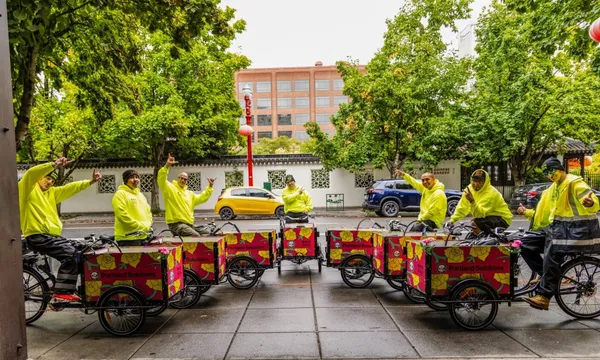
Cleaning crews operate along predetermined routes using bikes and trucks, with service frequency tailored to conditions in each corridor. The city has described the cadence as flexible—ranging from weekly visits in some locations to periodic work in others—based on observed need. Work is concentrated on busy stretches of commercial corridors and city centers rather than residential streets.
Routes listed by the city span multiple districts and include well-traveled streets such as NE Sandy Boulevard, E Burnside Street, SE Division Street, NE 82nd Avenue, N Lombard Street, N Williams Avenue, NE Alberta Street, SE Hawthorne Boulevard, SE Foster Road, NW 23rd Avenue, and portions of West Burnside and NW/Northwest corridors, among others.
Funding structure and contracted workforce
The city has budgeted $1.7 million for most of the service through an allocation associated with PEMO. In the Gateway area, the city has described a separate three-year partnership model with Multnomah County and TriMet, with each partner contributing $100,000 annually. Additional route support in parts of District 4 has been tied to allocations from individual councilors.
Service delivery is handled through contractors, including Central City Concern and Cultivate. The city has emphasized employment aspects of the contracts, describing sidewalk cleaning as paid work that can be paired with workforce re-entry opportunities.
City leaders have framed the work as a visible, practical measure aimed at improving everyday conditions—cleaner walking routes, reduced exposure to hazardous waste, and a more consistent standard of cleanliness along commercial streets.
Context: cleanup consolidation and separate transportation sweeping expansion
The sidewalk cleaning expansion sits alongside other city cleanup and maintenance actions undertaken in recent years, including consolidation of cleanup functions under PEMO and separate investments in street sweeping through the Portland Bureau of Transportation (PBOT). PBOT’s street cleaning program focuses on roadway sweeping across major arterials, with a city plan that includes the start of citywide residential street sweeping by July 2026.
- Sidewalk cleaning program: trash removal, biohazard cleanup, pressure washing, and limited graffiti removal on select city assets.
- Street sweeping program: roadway-focused sweeping on arterial routes, with an expansion timeline that includes residential sweeping starting July 2026.
- Geographic focus: business corridors and high-impact areas rather than residential sidewalks.
The city has said the sidewalk cleaning program will continue to adjust routes and frequencies based on conditions, while maintaining a corridor-based approach intended to deliver routine, visible improvements in public-right-of-way cleanliness.