Portland City Council removes police accountability board alternate after refusal to sign required confidentiality agreement
Removal follows onboarding rules for Portland’s new civilian police oversight structure
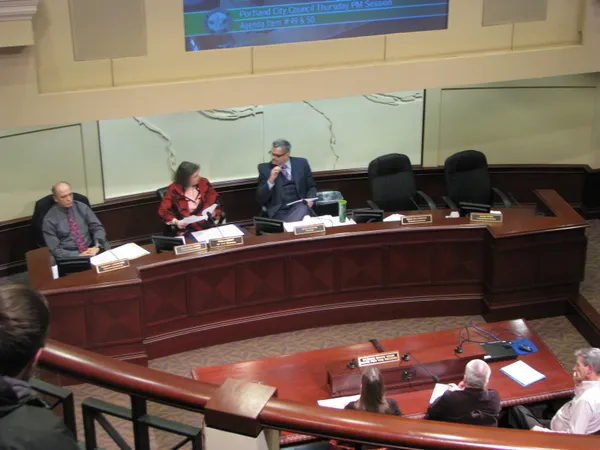
Portland City Council voted on Feb. 11, 2026, to remove an alternate member of the Community Board for Police Accountability (CBPA) after the person did not complete required onboarding steps, including signing a confidentiality agreement. The action was part of a broader council agenda item addressing vacancies, eligibility determinations and the appointment of alternates as the city moves toward launching its voter-approved, community-led police oversight system.
The CBPA is a governing body of community volunteers created under the city’s post-2020 police accountability reforms. The board is designed to play a central role in independent oversight of the Portland Police Bureau, including participation in misconduct investigations and decisions within the accountability process.
What the council voted on, and why it mattered
Council’s Feb. 11 action addressed multiple personnel changes. City records show that several appointees resigned during the period when members and alternates were undergoing background, eligibility and Criminal Justice Information Services (CJIS) checks, as well as required training. In addition, city administrators recommended removals for ineligibility or for cause under city code provisions governing the CBPA.
For the alternate member removed for cause, the basis was non-completion of administrative requirements tied to service as an alternate. City code requires CBPA members to sign a confidentiality agreement and to complete paperwork necessary for access to city resources and support services. The removal recommendation stated the alternate did not complete those requirements, triggering a “for cause” removal pathway.
Eligibility, screening, and “bias” standards
Records from the city’s CBPA onboarding process describe several layers of screening applied to appointees, including external background checks, CJIS checks, and an eligibility review. As part of the eligibility process, a vendor performed an online search of news, blogs and social media using predetermined criteria intended to identify demonstrated bias for or against law enforcement—an eligibility restriction written into city code for CBPA membership.
City documentation also notes that earlier stages of the appointment process did not include “bias checks” before Council made initial appointments in June 2025. The city’s materials state this was discussed publicly and that bias checks were incorporated into the subsequent background-check phase, with plans to complete such checks prior to appointments in future recruitments.
Next steps for the board
The Feb. 11 council agenda item also included appointing eligible alternates into vacant board seats to maintain the membership needed for the CBPA to begin conducting business. City records show the CBPA scheduled its inaugural meeting for Feb. 11, 2026, after a quorum of members completed code-required background, eligibility and CJIS steps.
- Council processed resignations that created vacancies among members and alternates.
- Council considered removals tied to eligibility restrictions and onboarding requirements.
- Council moved to appoint alternates to fill vacant board member positions.
The CBPA’s membership rules require both eligibility clearance and completion of confidentiality and administrative prerequisites before members or alternates can serve.
The personnel actions underscore the administrative and legal constraints shaping the rollout of Portland’s new oversight system, including confidentiality requirements connected to access to sensitive criminal justice information and the city’s timeline for operationalizing the board.