Multnomah County added about 900 residents in 2025, extending years of near-flat population change
Oregon’s most populous county posts another year of marginal growth
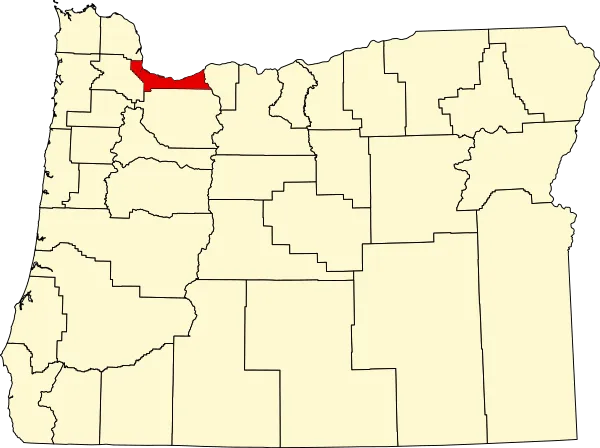
Multnomah County, the state’s largest county by population and home to most of Portland, recorded only a small increase in residents in 2025, continuing a multiyear pattern of limited growth following pandemic-era losses.
New U.S. Census Bureau county population estimates indicate Multnomah County added just over 900 residents from 2024 to 2025—about a 0.1% increase—bringing the county’s population to 795,391 as of July 1, 2025. The gain follows a slight increase in the prior year: the county was estimated at 795,897 residents as of July 1, 2024, up 0.2% from July 1, 2023.
Still below pre-pandemic levels
Despite the recent upticks, the county remains well below its early-pandemic level. The 2020 Census counted 815,428 residents in Multnomah County as of April 1, 2020. Census estimates for July 2024 placed the county at 795,897, reflecting a decline of roughly 2.4% from the 2020 base. The 2025 estimate shows the county has not yet returned to its 2020 population.
The data show stabilization after sharp declines early in the decade, but the overall trajectory since 2020 remains negative.
How the county’s slow growth fits into broader regional shifts
Recent years have shown population growth in parts of the Portland metropolitan area even as Multnomah County’s change has been modest. In the 2023–2024 period, nearby Washington County grew about 1% and Clackamas County about 0.3%, reflecting a stronger pace than Multnomah County over the same interval. This divergence has been widely discussed as a feature of the region’s post-2020 demographic realignment.
Key drivers behind recent population change
County population totals are shaped by natural change (births minus deaths) and migration. Nationally, recent county growth has been increasingly tied to international migration, while many areas continue to experience natural decrease and domestic out-migration. For Multnomah County specifically, the 2023–2024 change has been characterized by positive international migration alongside negative domestic migration, producing only a small net increase overall.
What to watch next
Whether 2026 estimates confirm a sustained return to growth or continued near-flat totals.
How population shifts within the broader metro area affect housing demand, transportation planning, and service needs across county lines.
Whether migration patterns continue to offset longer-term trends such as lower birth rates and aging populations.
The new estimates reinforce that Multnomah County’s population has stabilized compared with earlier declines, but growth remains minimal by historic standards and insufficient to restore the county’s pre-2020 population level.