Interstate Bridge Replacement between Oregon and Washington faces updated $7.65 billion estimate and funding questions
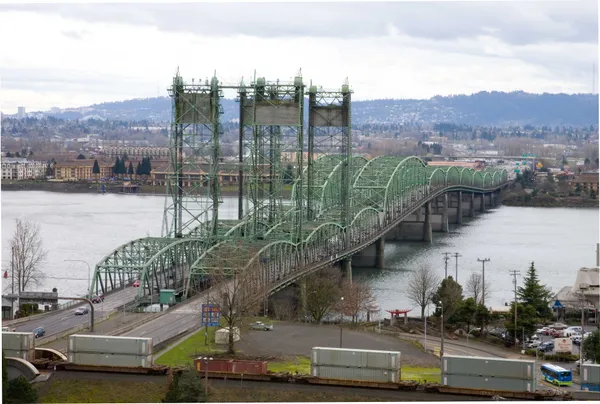
A new cost marker for a long-planned Columbia River crossing
The Interstate Bridge Replacement (IBR) program—intended to replace the aging Interstate Bridge carrying I-5 between Portland, Oregon, and Vancouver, Washington—has been associated with a projected cost of $7.65 billion in recent public discussion. The figure lands slightly above the program’s prior published cost range of $5.0 billion to $7.5 billion, which had been presented as the working estimate as design and environmental review advanced.
The IBR program scope goes beyond a single river span. Prior program materials describe a package that includes a replacement crossing of the Columbia River, replacement of the North Portland Harbor Bridge, interchange work in the corridor, and extension of light rail into Vancouver with new station locations. The cost figure attached to IBR has therefore reflected a corridor program rather than only one bridge structure.
What drives the spread between estimates
Large transportation megaprojects commonly carry a wide cost range early in design because final costs depend on decisions that remain unresolved until late-stage engineering. For IBR, those decisions include the final bridge type and height and how marine navigation requirements are addressed, along with the amount and sequencing of interchange and transit components. Additional drivers include inflation over multi-year construction timelines, labor availability, specialized construction risks, and material pricing for steel, concrete, and electrical systems.
Design selection and permitting constraints: Key design parameters can shift structural quantities, construction staging, and property needs.
Inflation and schedule risk: Extended timelines can translate into higher “year-of-expenditure” costs even if base quantities remain similar.
Geotechnical and river conditions: Foundation design and in-water work can add uncertainty that is typically resolved through additional investigations.
Funding structure: committed money versus total program cost
Public materials from the program have identified a funding approach that combines federal grants, state contributions from Oregon and Washington, and tolling revenue. Recent program summaries have described roughly $5.5 billion in committed funding, along with additional prospective funding tied to transit elements. That framing suggests that the overall affordability of the program depends on closing remaining gaps through additional federal participation, toll-backed financing, further state allocations, scope phasing, or a combination of those mechanisms.
IBR’s published financial approach has relied on multiple revenue streams—federal grants, state funds, and tolling—rather than a single dedicated source.
What happens next
The next major inflection points for the project are tied to finalizing a bridge design and aligning an updated cost estimate with a financing plan that can support construction. As the program moves further into design and procurement, cost estimates are expected to be revisited to reflect updated risk modeling, inflation assumptions, and the ultimate project scope that will be built first if the corridor is phased.
For travelers and freight users in the Portland–Vancouver corridor, the practical question is not only the headline number, but how quickly a final, buildable design can be paired with sufficient funding to begin construction while maintaining commitments to safety, seismic resilience, and multimodal connectivity.