How Senate Bill 1501 advanced Oregon’s $365 million plan to renovate Portland’s Moda Center
A public-finance framework tied to a long-term lease
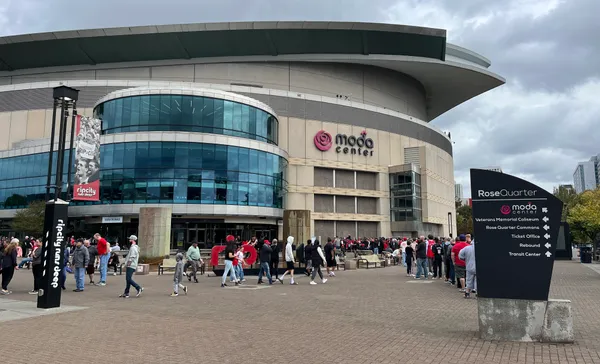
Oregon lawmakers have approved a major state financing package for renovations at Portland’s Moda Center, advancing Senate Bill 1501 during the 2026 short legislative session. The measure sets up a mechanism for up to about $360 million in state bonds, widely described in legislative debate as roughly $365 million in public support, aimed at modernizing the arena that opened in 1995.
The bill’s central condition is a required 20-year lease commitment to keep the Portland Trail Blazers playing at Moda Center for the duration of the bonding period. The lease requirement was treated as a key accountability element in legislative deliberations, particularly in response to concerns about public dollars being committed before long-term tenancy was secured.
Where the money would come from
Rather than creating a new statewide tax, the bill is structured around capturing and redirecting certain state income tax revenues generated in the Rose Quarter area. The redirected revenue streams include income taxes associated with players, performers, and employees tied to events and employment in the district, as well as taxes connected to construction labor for the renovation work.
Under SB 1501, those redirected revenues would flow into a dedicated Oregon Arena Fund used to support arena-related financing and costs contemplated in the measure.
Joint authority and ownership structure
SB 1501 also outlines a governance model intended to formalize public participation in the venue’s ownership and operation. It authorizes the Oregon Department of Administrative Services to enter into agreements with one or more public bodies to establish a joint authority with the purpose of owning and operating the Moda Center.
This structure builds on recent public actions around the Rose Quarter campus, including a “bridge” arrangement previously approved by Portland that transferred the arena into public ownership and set a temporary operating framework while longer-term renovation planning and financing were pursued.
Arguments that moved votes across regions and parties
In floor debate and committee testimony, supporters described the project as an economic development and jobs initiative tied to a high-traffic venue, with an emphasis on keeping major events in Oregon and supporting activity in Portland’s central city. Lawmakers who backed the bill also framed the arena as a statewide asset that draws tourism and spending beyond Portland.
Opponents raised questions about the size of the public commitment, whether additional public contributions from local governments would be needed beyond the state’s share, and whether the financing terms appropriately protected taxpayers if future circumstances changed. The bill’s reliance on redirected income taxes, the 20-year lease requirement, and provisions intended to protect bond repayment were repeatedly cited as the primary policy tools meant to address those concerns.
- Bill: Senate Bill 1501 (2026 Regular Session)
- State support: up to about $360 million in bonding authority (often cited as roughly $365 million)
- Key condition: 20-year lease commitment tied to the bond term
- Funding concept: redirected state income tax revenue tied to Rose Quarter activity and renovation construction
SB 1501 establishes a state-local framework that couples long-term tenancy requirements with a dedicated revenue stream intended to support bond repayment and arena improvements.
With legislative approval in place, the next decisive step is execution: final agreements governing the joint authority, the lease terms, and the precise flow of redirected revenues that would back the bonds and define the scope and timing of Moda Center renovations.