Downtown Portland’s Merchant Bank Building changes hands below asking price amid weak office demand
A discounted sale in the central business district
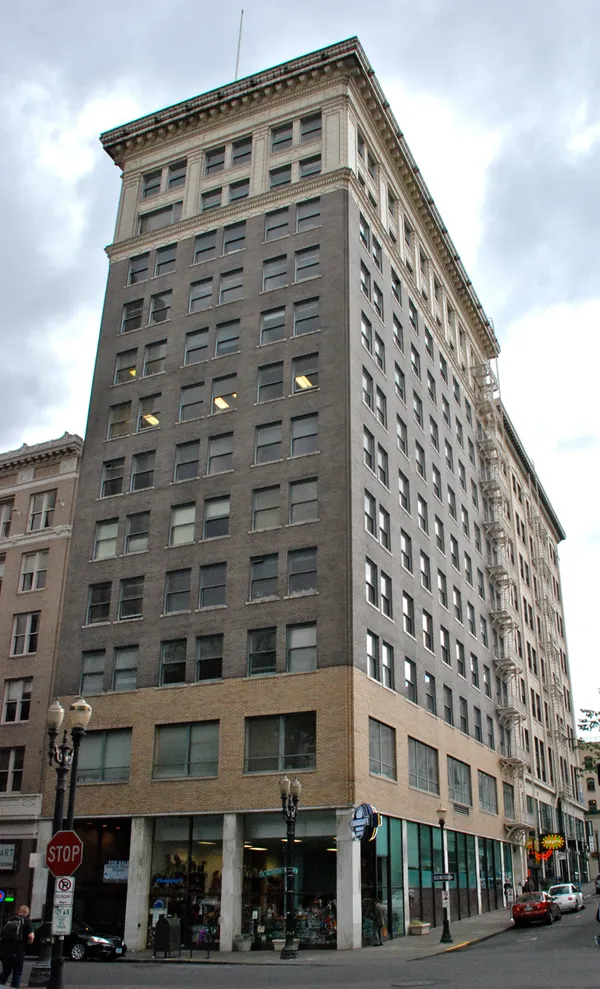
The Merchant Bank Building, a five-story, late-19th-century commercial property at 404–418 SW Washington St. in downtown Portland, has sold for less than its asking price, a result that aligns with a broader repricing of older office assets in the city’s central core.
The property had been marketed in late 2025 at $1.95 million, a level that translated to roughly the high-$60s per square foot based on published building-size figures of roughly 28,000–29,000 square feet, including basement area. Marketing materials described the building as a mixed-use office-and-retail asset positioned near the MAX light-rail and Portland Streetcar network and noted a package of capital work that included seismic reinforcement and major building-system upgrades.
What is known about the building and its recent trajectory
The property’s recent market history indicates a sharp change in valuation compared with its last widely reported sale. The building previously traded in 2019 for $6.1 million, and it later came under the control of a Seattle-based lender, underscoring the financial stress that has affected some downtown office properties in the post-pandemic period.
At the time it was marketed, the building’s occupancy was described as exceptionally low. Separate listings and offering materials variously characterized the property as roughly 4% leased or fully vacant, reflecting turnover that can occur during repositioning efforts and the difficulty many older buildings face in retaining tenants when downtown office demand softens.
Address: 404–418 SW Washington St.
Configuration: five-story building with office and ground-floor retail potential
Approximate size: about 28,000–29,000 square feet (including basement area)
Marketing price (late 2025): $1.95 million
Why selling below ask matters in the current market
Sales below asking price are not unusual in a market where buyers are underwriting higher borrowing costs, uncertain lease-up timelines, and additional capital needs to compete for tenants. For older downtown buildings, the key variables typically include seismic and life-safety compliance, the cost of modernizing mechanical systems, and the ability to secure creditworthy tenants at rents that support both operations and financing.
Commercial transactions in downtown Portland have increasingly reflected a gap between pre-2020 valuations and pricing tied to today’s occupancy and financing conditions.
What to watch next
The sale’s outcome will likely be evaluated alongside other recent downtown trades as market participants look for clearer price discovery. Attention will center on whether the building’s new owner pursues an owner-user strategy, a tenant-by-tenant lease-up, or a deeper conversion plan aimed at reducing exposure to traditional office demand.
In the near term, leasing progress and the pace of additional discounted transactions will remain important indicators for how quickly downtown Portland’s older office inventory can stabilize.