Bright green fireball spotted over Portland around 6:06 a.m. prompts meteor reporting and analysis
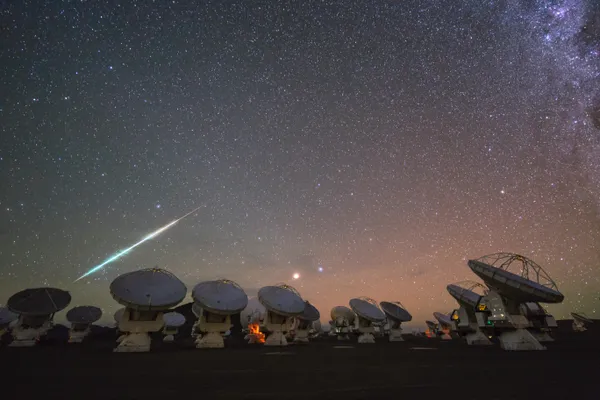
A brief, vivid flash over the metro area
A bright green “fireball” was reported across the Portland metro area at about 6:06 a.m., with multiple residents describing a fast-moving streak of light that briefly illuminated the predawn sky. The sighting time clustered closely around 6 a.m., suggesting a single event visible from a wide area rather than localized lighting or fireworks.
No confirmed reports of damage or injuries were associated with the flash. In most fireball events, the luminous phase lasts only seconds, and an object can be visible across large distances because it burns high in the atmosphere.
What a “green fireball” usually indicates
Fireballs are exceptionally bright meteors caused by small natural objects entering Earth’s atmosphere at high speed and heating rapidly due to compression and friction. The green color frequently reported by witnesses is commonly linked to the way certain elements radiate light when vaporized during atmospheric entry. Color alone is not sufficient to identify composition, because brightness, viewing angle, and camera sensors can shift perceived hues.
In many cases, the object disintegrates completely before reaching the ground. When fragments survive, they may fall as meteorites, but a confirmed meteorite fall typically requires physical recovery and laboratory verification.
How scientists verify and reconstruct events
Meteor researchers rely on time-stamped eyewitness reports, security camera and dashcam recordings, and specialized all-sky camera networks to determine an object’s trajectory and whether any debris may have reached the surface. When many observations are submitted from different locations, analysts can triangulate the path and estimate altitude, speed, and fragmentation.
Public reporting systems compile accounts into a single event when enough submissions share consistent timing and direction. These datasets are widely used by the astronomy community to assess how often fireballs occur and to identify candidates for meteorite searches.
What to note if you saw it
- Exact time (as close as possible) and your location
- Direction of travel (for example: west to east) and where it disappeared
- Color changes, sparks, or fragmentation into multiple pieces
- Any lingering “train” (a glowing or smoky trail) and how long it persisted
- Whether you heard a delayed boom minutes later, which can occur if a sonic boom reaches the ground
Fireball reports become most valuable when they include precise timing, direction, and corroborating video, allowing independent reconstruction of the flight path.
What happens next
As additional reports and videos are collected, analysts can determine whether the Portland-area fireball was part of a broader regional event and whether it likely ended over land or water. Unless physical fragments are recovered and verified, the incident is generally classified as an atmospheric fireball without confirmed meteorites.
Residents who captured video are encouraged to preserve the original file, retain the device’s time settings, and note their camera’s location and orientation, as these details can materially improve a trajectory solution.